

Explore EIAC
About EIAC update
Emirates International Accreditation Centre (EIAC) was established pursuant to Law number (27) for the year 2015, issued by His Highness Sheikh Mohammed bin Rashid Al Maktoum, the Vice President and Prime Minister of the UAE, Ruler of Dubai, to become the governmental accreditation body of the Emirate of Dubai. /n Our main activity is to accredit organizations, both Governmental and Private, within the UAE and overseas, including Conformity Assessment Bodies (but not limited to) Laboratories (Testing, Calibration and Medical), Inspection Bodies, Certification Bodies (Management Systems, Product Certification and Personal Certification), Halal Conformity Assessment Bodies, Proficiency Testing Program Providers, Reference Materials Production Activities, Validation and Verification Activities. Additionally, Healthcare Organizations such as hospitals, clinics, day surgery centers, fertility centers, home health services, medical tourism facilities, and telehealth services.
EIAC's stakeholders
EIAC recognizes that attaining excellence and ensuring the integrity of products delivered to society can only be achieved through an inclusive approach and collaboration with all stakeholders, not least the legislation and regulatory bodies, Conformity Assessment Bodies and Healthcare Organizations.
EIAC at the micro level
Accredited Organizations are the fundament tool that empowers regulators to ensure high-standardized quality infrastructure for their market. EIAC strives to understand the needs of the regulators by proactively studying market trends to foresight potential risks that can be controlled by Conformity Assessments; this stimulates the integration of Conformity Assessment Bodies in new markets and supports their business development as well as encourages the development of innovative concepts of Conformity Assessment.
EIAC at the macro level test
EIAC is recognized from leading regional and international recognition organizations. This elevates the nation's position within the global economic scene, ensures the integrity of products accredited by CABs and facilitates global trade. As per establishment law (number 27/2015), EIAC aims to position Dubai as the capital of Islam and an internationally recognized Halal conformity accreditor. The centre adheres to international best practices in the interest of its stakeholders by activating its membership with the International Forums related to Accreditation, such as the ILAC, IAF, SMIIC and IHAF.
test title
test title test title test title
Brief History
EIAC was established to replace the Conformity Assessment Accreditation Department at Dubai Municipality (formed in 2005) and assigned as an independent and official governmental body for the accreditation of Conformity Assessment Bodies.
Strategy
Our Vision
We Accredit... The World Recognize.
Our Mission
To Provide Comprehensive And Innovative Accreditation Services, Internationally Recognized, that Contributes in Sustaining The Quality Infrastructure, Healthcare System, Safety And Environmental Protection Systems, And Industrial Revolutions, To Advance Businesses Efficiency And Competitiveness, And Enhance The UAE’s Position As A Hub For The Global Economy.
Our Values
Competitiveness and Globalism
Enhancing the global competitive advantage of the UAE and the Emirate to be a world-leading Emirati imprint of confidence
Creativity and Innovation
Creating an attractive and stimulating work environment for creativity, and adopting innovative methods in our projects and services to achieve leadership.
new one
new one
Strategic Plan
 Strategic Plan (2022 – 2026)
 Strategic Plan (2022 – 2026) new
Impartiality Policy update
The Emirates International Accreditation Centre (EIAC) understands the importance of impartiality and is committed to providing the accreditation services with highest level of impartiality, independency and transparency. The EIAC manages conflict of interest and ensures objectivity of its accreditation activities.
The EIAC identifies analyses, evaluates, treats, monitors and documents on an ongoing basis the risks to impartiality arising from its activities including any conflicts arising from its relationships or from the relationships of its personnel. The process includes participation of appropriate interested parties.
The EIAC does not provide consultancy and has no relationship with other consultants. The EIAC’s activities shall not be presented as linked with consultancy or other services that pose an unacceptable risk to impartiality. Nothing shall be said or implied that would suggest that accreditation would be simpler, easier, faster, or less expensive if any specified person(s) or consultancy were used. The EIAC takes appropriate actions to correct any such claims.
We provide EIAC personnel information, support and training, appropriate delegation, positive recognition and the opportunity to demonstrate skills, ability and leadership, all of which serve to assure the continued quality of all our activities.The EIAC shall ensure that all its personnel, internal or external, or committees, who could influence the accreditation activities, shall act impartially, and shall not allow commercial, financial or other pressures to compromise the impartiality. All staff, subcontracted assessors and committee members are required to sign “Protecting confidentiality/impartiality agreement” with EIAC.The EIAC periodically reviews the compliance with impartiality requirement as per ISO/IEC 17011:2017.
EIAC Board of Directors
His Excellency Eng. Marwan Ahmad Ali Bin Ghalita
Director General of Dubai Municipality
Chairman of the Emirates International Accreditation Centre Board of Directors

test
test
test
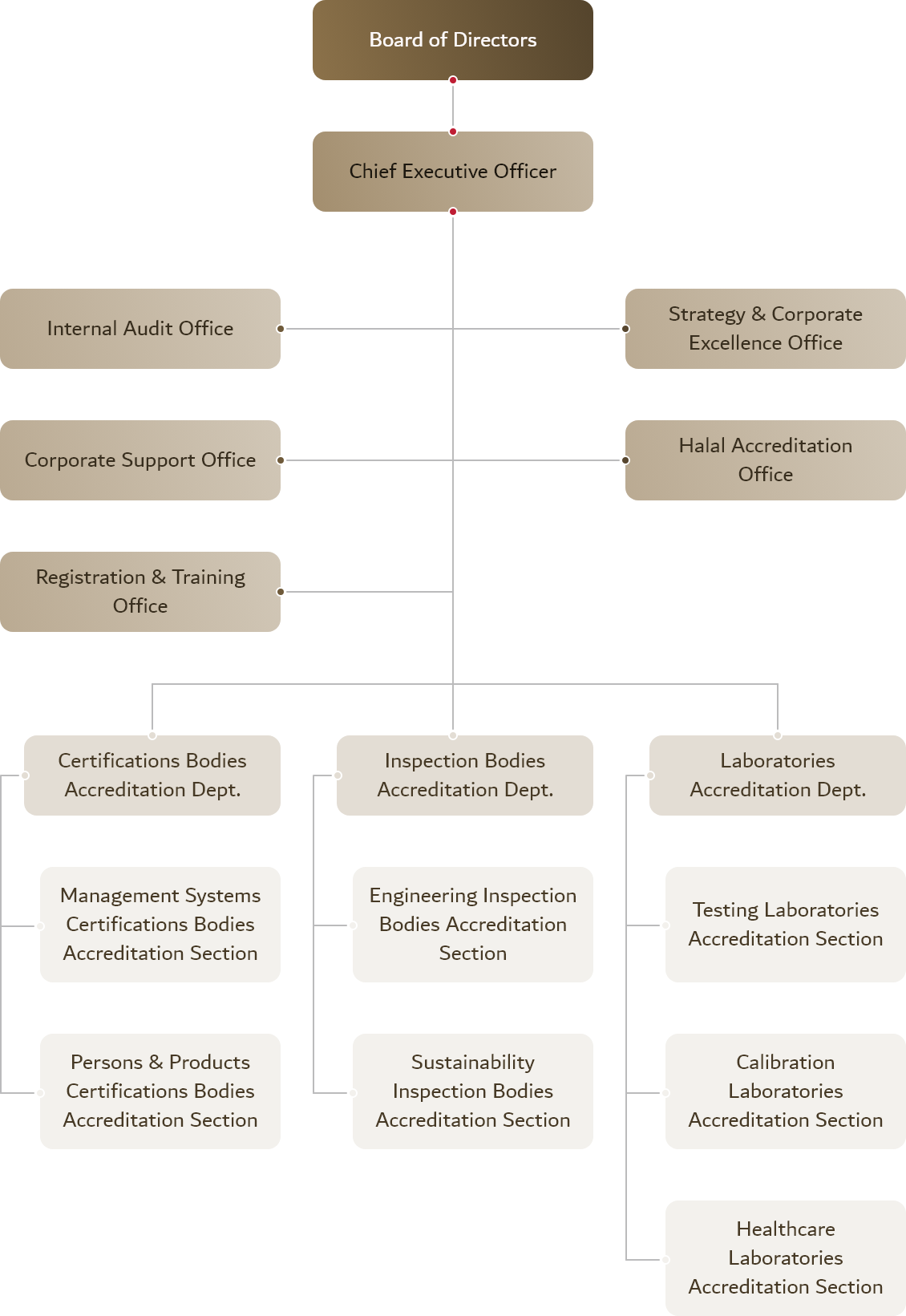
EIAC Structure
EIAC Logos
The art of ambigram has been adopted in the creation of the Emirates International Accreditation Centre (EIAC) logo, allowing it to be read in English letters from left to right as "EIAC," which is an abbreviation of the Centre's name in English, or the word "اعتماد" (Accreditation) from right to left, which means 'Accreditation' in Arabic and represents the core work of the Centre. The logo reflects the Centre's vision of becoming one of the most trusted accreditation centres globally and gaining international recognition for its services, which extend beyond institutions in the UAE.
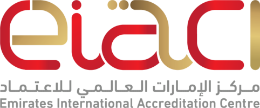
The Red Logo
Inspired by the colors of the Dubai Government logo, emphasizing the Centre's commitment to supporting the aspirations and ambitions of the Emirate of Dubai.
The usage of the red logo is restricted to the Emirates International Accreditation Centre (EIAC) only.

The Blue Logo
Symbolizes our global presence and alignment with the International Laboratory Accreditation Cooperation (ILAC) and the International Accreditation Forum (IAF), with blue being a prominent color among international accreditation bodies.
Used by the accredited Conformity Assessment Bodies in combination with a unique accreditation number.
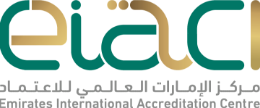
The Green Logo
Represents our commitment to the Islamic economy, as green internationally symbolizes the halal sector, reflecting the logo of the Organization of Islamic Cooperation (OIC)
Used by Accredited Halal Conformity Assessment Bodies in combination with a unique accreditation number.
Colors and Symbolism
Primary Colors
Pantone: 185C
C:0
M:97
Y:76
K:0
R:229
G:26
B:52
Hex: #E51A34
Pantone: 872C
C:38.5
M:43.5
Y:66.5
K:31
R:134
G:112
B:77
Hex: #86704D
Pantone: Cool Gray 9 C
C:53
M:42
Y:39
K:23
R:118
G:119
B:122
Hex: #76777A
Secondary Colors
Pantone: 3295C
C:100
M:25
Y:64.5
K:13.5
R:0
G:117
B:101
Hex: #007565
Pantone: 2738C
C:100
M:90.5
Y:24
K:9
R:0
G:11
B:140
Hex: #000BBC
Protection and Ownership
The Emirates International Centre (EIAC) is the owner of all its symbols and logos. These logos are protected as per UAE laws, and unauthorized use of these logos is not permitted. The use of EIAC logos is only allowed with formal permission from EIAC. The EIAC has issued a Requirement document titled "The Conditions for the Use of EIAC Accreditation Symbol and ILAC MRA/IAF MLA Marks - EIAC-RQ-GEN-002," which is available in this website.
International Recognition of EIAC
 4
4


4545545
54454545
 test 1
1
dsad
sdaasdsad
 International Laboratory Accreditation Cooperation (ILAC) test 2
Management Systems Certification - ISO/IEC 17021-1 test 2
MS: ISO/IEC 17021-2 test 2
 International Laboratory Accreditation Cooperation (ILAC)
Management Systems Certification - ISO/IEC 17021-1
MS: ISO/IEC 17021-2
Impartiality Policy
The Emirates International Accreditation Centre (EIAC) recognizes that impartiality is essential to building and maintaining trust in accreditation and ensuring the credibility of its outcomes. EIAC is fully committed to conducting all accreditation activities with the highest standards of impartiality, independence, and transparency. This commitment is grounded in its establishment law, the governance principles of the Government of Dubai, and international requirements such as ISO/IEC 17011. All decisions are based solely on objective evidence of conformity, free from any undue influence, commercial, financial, or otherwise. To safeguard impartiality, EIAC has implemented a comprehensive framework that includes:
1 - Commitment to Impartiality and Objectivity EIAC ensures that all accreditation activities are:
• Conducted without bias or undue influence
• Governed by a robust structure designed to manage conflicts of interest and maintain objectivity at all operational levels
2 - Risk-Based Impartiality Management To safeguard impartiality, EIAC has implemented a comprehensive risk management system that includes:
• Regular identification, analysis, and assessment of risks to impartiality.
• Continuous treatment, monitoring, and documentation of these risks.
• Inclusion of potential conflicts of interest related to personnel, committees, or institutional relationships.
• Active involvement of relevant stakeholders to ensure transparency and accountability.
3 - Assurance of Structural and Operational Independence To prevent real or perceived conflicts of interest, EIAC:
• Does not provide consultancy services.
• Maintains no affiliations with consultants or consultancy entities.
• Prohibits linking its accreditation services to any external consultancy.
• Forbids statements or suggestions that imply accreditation through EIAC can be facilitated by specific consultants or individuals.
• Commits to taking immediate corrective action in response to any violations or misrepresentations
4 - Assurance of Structural and Operational Independence To prevent real or perceived conflicts of interest, EIAC:
• Does not provide consultancy services.
• Maintains no affiliations with consultants or consultancy entities.
• Prohibits linking its accreditation services to any external consultancy.
• Forbids statements or suggestions that imply accreditation through EIAC can be facilitated by specific consultants or individuals.
• Commits to taking immediate corrective action in response to any violations or misrepresentations
4 - Personnel Competence and Culture of Impartiality To support impartiality and continuous excellence, EIAC invests in its personnel through:
• Ongoing technical training and professional development.
• Clear delegation of roles, responsibilities, and decision-making authority.
• Performance recognition and motivational systems.
• Opportunities for personnel to demonstrate leadership, technical competence, and ethical behavior This approach ensures the sustained quality, consistency, and impartiality of EIAC’s accreditation services.
5 - Binding Commitments of Personnel and Committees To institutionalize impartiality:
• All EIAC personnel (internal and external), assessors, and committee members are required to act with full impartiality.
• They must not be influenced by any commercial, financial, or other external pressures.
• All individuals must sign a "Confidentiality and Impartiality Protection Agreement" to uphold ethical accountability and legal integrity.
6 - Compliance with International Standards and Recognition Requirements EIAC regularly reviews and evaluates its impartiality practices to ensure:
• Full compliance with ISO/IEC 17011:2017 and other applicable national and international standards.
• Alignment with the requirements of international and regional recognition frameworks, including peer evaluations by: ILAC (International Laboratory Accreditation Cooperation), IAF (International Accreditation Forum), ARAC (Arab Accreditation Cooperation), APAC (Asia Pacific Accreditation Cooperation), ISQua (The International Society for Quality in Health Care.
7 - Compliance with International Standards and Recognition Requirements EIAC regularly reviews and evaluates its impartiality practices to ensure:
• Full compliance with ISO/IEC 17011:2017 and other applicable national and international standards.
• Alignment with the requirements of international and regional recognition frameworks, including peer evaluations by: ILAC (International Laboratory Accreditation Cooperation), IAF (International Accreditation Forum), ARAC (Arab Accreditation Cooperation), APAC (Asia Pacific Accreditation Cooperation), ISQua (The International Society for Quality in Health Care.
EIAC’s constant commitment to impartiality is central to its mission to deliver accreditation services built on transparency, objectivity, and complete independence. These trusted and internationally recognized services safeguard public interest and reinforce EIAC’s leadership in supporting all aspects of quality infrastructure.
Legislations
| Title | Document Number | Release On | Download |
|---|---|---|---|
| 1 | 1 | 05 February 2026 |
|
| 2 | 2 | 03 February 2026 |
|
| new 1 | 456456645654 | 11 March 2026 |
|